
What I've Been Studying Lately: Spring 2026
A small glimpse into my first personal curriculum

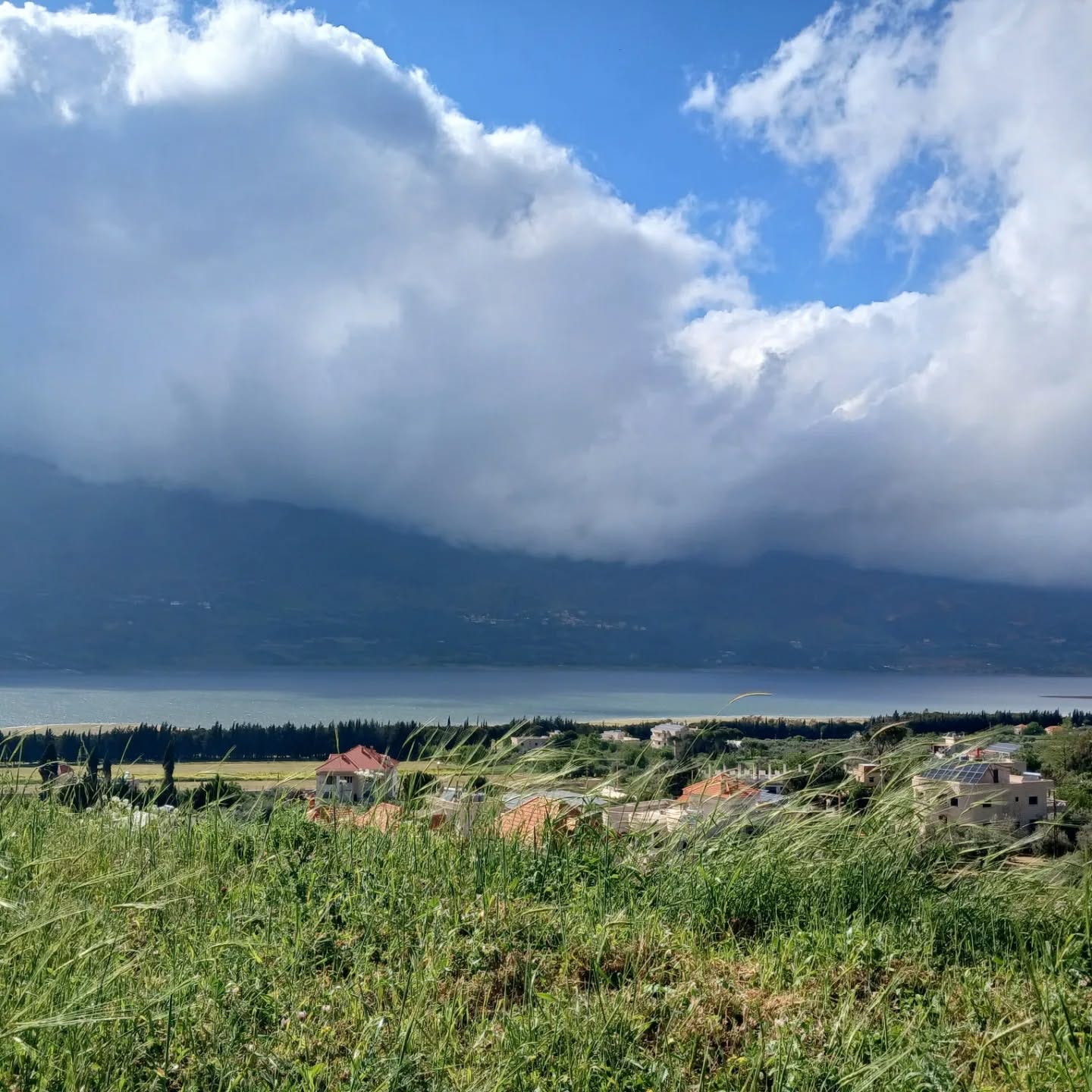
Spring swept in with its usual grace early in April. The deep blue of the sky was a welcome sight (months of wintry gloom really tend to make one forget what blue looks like) and so was the green that suddenly matted the floor of the village. People took to the outdoors as though coming out of hibernation; and the dam road, a charming walking spot, became crowded with those seeking a momentary peace.
The village underwent, in appearance and in spirit, a resuscitation.
Among the things revived was my enthusiasm for learning. This is the first year since graduating in which I make a serious attempt at autodidactism—i.e., the practice of learning without the formal guidance of instructors and institutions. I wanted my reading list to be more than just a list. It missed structure and rigor; the treatment of knowledge not as mere information (or, as in the case of some fiction, entertainment) but as a gateway for a more enlightened and encompassing perspective on matters big and small.
Last December, I took to topically (and sub-topically) organizing what was a random assortment of TBR fiction and non-fiction books. Then for each topic I prepared secondary sources, online lectures, and writing prompts—an undertaking that resulted in my first (very flawed) personal curriculum, but one that has been since January a fair starting point as I navigate the subjects and ideas I’m passionate about within the humanities.
My intention is to share a comprehensive review of this self-education experience before the close of the year—to reflect on what worked, what didn’t, and what changes I’ll be making for next year’s program.
Today, however, I chose to give you a little glimpse into this curriculum and share what I’ll be tackling for the rest of spring and the first weeks of summer, insha’Allah.
Ecocriticism: the relationship between literature and the physical environment
It’s very fitting that I should look into this topic in the months nature is most appreciated.
Literary ecocriticism had its beginnings in the United States in the latter half of the twentieth century, taking its bearings from three authors whose works celebrate the natural world: Ralph Waldo Emerson, Margaret Fuller, and Henry David Thoreau. The three were members of a group of writers and philosophers that founded transcendentalism—the first literary movement in America to achieve cultural independence from European models.
But in Europe, too, particularly in the United Kingdom, an ecological approach to literature emerged rather concurrently. It is referred to as green studies, and though generally tackling the same concerns as its American counterpart, is thought to be less celebratory and more “minatory,” (Barry, 2002; p. 1621) in tone; that is, it deals mostly with literature that warns of environmental threats emanating from industrial, governmental, and neo-colonial forces.
Ecocriticism is not new to me. I was introduced to it as an analytical lens in an undergrad course titled Theories of Literature and Culture, and learned that in order to understand the relationship between a given literary text and the environment, one ought to ask a series of questions about that text, such as:
→ How does it represent the natural world?
Writers have treated nature in quite diverse ways across genres, often anthropomorphizing its elements to give it a character-like existence. But in those narratives where nature behaves merely as a worldly feature, it may possess a neutral existence, described as the complex, unified ecosystem that it is—a world of its own, one that does not play an active part in progressing or stalling the story. Alternatively, it could be a romanticized backdrop, there to complement, and often mirror, the characters’ emotional development. The rise and ebb of tension. But perhaps more popular is its villainization; its depiction as a sinister or hostile force that disrupts an otherwise orderly life, testing the resilience of its victims and helping bring about their growth trajectory.
→ What types of relationships are depicted between that world and the human race?
Stories that revolve around natural disasters tend to portray the two as adversaries. The latter struggles to survive the former, whose outburst is a retaliation against exploitative or neglectful behavior, or, simply, a storytelling device employed to escalate events.
But the relationship could be positive, too. A symbiotic one, for example, describes a co-dependence between humanity and nature, each working to keep the other thriving; whereas a restorative one would depict revival—humans laboring to keep flora and fauna unharmed and safe from the threat of extinction or, as in some apocalyptic fiction, nature acting as the last thread of hope for the survival and repopulation of a calamity-struck human race.
→ How does it engage with ideas of environmental justice?
Here an ecocritic would want to know whether the text reinforces or challenges harmful ideologies. Some narratives may normalize exploitation and perpetuate sterotypes against environmentally mindful behavior. Of such stereotypes are the “tree-hugger” caricature often used to paint responsible individuals as overly sentimental or eccentric; the belief that environmentalism is a feminine concern, that practicing basic care toward the life around us softens, and thus emasculates, a man; and that sustainability is an unaffordable luxury, or even anti-modernity.
—and more, all aiming to help the ecocritic discern the different ways a given piece of literature may shape the reader’s attitude toward nature and the topics pertaining to it.
University taught me the basics, and at the time we focused on applying ecocritical concepts to a “minatory” kind of literature. Tarek El Tayeb’s novella Cities Without Palms was our primary text, a beautifully written but bleak tale that uses phenomena such as droughts to reflect the protagonist’s inner turmoil. In re-learning ecocriticism now, I plan on shifting my attention to writing that spotlights the positive—the healing and beauty that come with natural abundance; or, at least, with natural presence.
The Secret Garden by Frances Hodgson Burnett is my current read, a story that presents the elements of nature, from its birds to its branches, as forces actively bringing about the physical and moral betterment of its human characters.
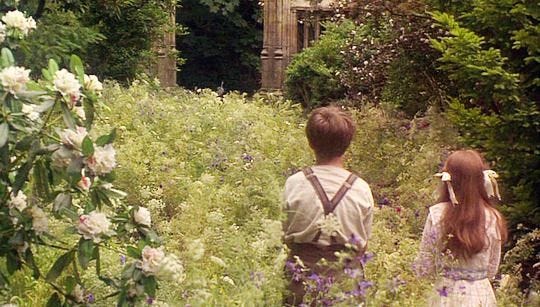
So far, midway through the novel, it’s evident that the relationship between Mary Lennox and the secret garden is symbiotic: she brings it back to life by planting and nourishing and laboring, and as that happens, the growing green things restore her health and liveliness. But nature does more than just heal here—it educates, too. As order is slowly recovered in the garden’s ecosystem—represented by the sacred routines of its animals, from mating to nest-making, and by the unrushed burst of color in all plant-things—the unruly girl learns patience and discipline, and her hopeless, sickly friend learns that the natural way of things is that light always follows the dark, and ease always follows hardship. That life has its seasons, and for this alone it is worth living.
I have fewer than a hundred pages left to conclude Burnett’s tale. Misselthwaite Manor continues to be a fortress, housing secrets and suffering besides people. The moor has not been explored yet, but even now it possesses an unmistakable charm and a psychological significance, reflecting, and often transforming, the moods of the characters.
I intend to pair this novel with a classic of Brazilian children’s literature, O Meu Pé de Laranja Lima by José Mauro de Vasconcelos. It centers five-year-old Zezé, an imaginative child who, living in severe poverty in Rio de Janeiro, is forced to grow up too soon. He copes with abuse, neglect, and loneliness—by befriending a talking orange tree.
Mary and Zezé, despite navigating widely different cultural contexts and personal experiences, approach the environment in a way that expresses a universal fact: that nature often exists to mend and heal.
In other words, there is plenty for an ecocritic to comment on in both novels, and as I study my secondary sources and deepen my understanding of this theoretical framework, I hope to also deepen my understanding of these seemingly simple, beautiful stories.
Girlhood studies: what does it mean to be a girl?
One of the perks of Substack is that you are always very likely to discover your next special interest. It has been a godsend in connecting me with like-minded individuals from all around the globe—those writing on similar ideas and reading the same books as I am.
If you have been following me for some time, you might recall that I started L.M. Montgomery’s beloved Anne of Green Gables series last September. It so happened that after I posted a short review of the sixth book, Anne of Ingleside, in March, a user reached out with a comment. She, too, is fond of those novels and has written about one of the points I bring up in my review: that Anne gradually disappears into the background in a series that carries her name.
I followed up with the commenter and, over the next several days, acquainted myself with her. Amanda Signori (who, to my delight, happens to be Brazilian, too!) writes dual publications—Empowering Imaginations and Imaginando—and I have found that her research interests tend to overlap much with mine. That said, go check out her work!
Her article on Anne of Green Gables did more than just expand on my observation; it introduced me to a new academic field.

Girlhood studies.
As an undergrad, I relied on feminist theory for much of the literature I analyzed. In those stories characters grappled with the challenges of womanhood and with questions of identity and autonomy while surviving realities that were less than merciful—realities fraught with racial, colonial, economic, and ableist oppression. Intersectionality was the go-to framework through which I looked at their suffering, focusing, if not entirely, on whether these women had a voice, and whether their voice amounted to anything.
Save for a composition I wrote on Neil Gaiman’s Coraline (which remains, to this day, my favorite of all the academic work I did then), seldom did I look into the matter of girlhood over the course of those three years. Even then, I analyzed Coraline from a perspective that combined child psychology with mainstream feminist approaches to parenthood—unaware of the existence of a whole body of research dedicated to dissecting and understanding what it means to be a girl.
Girlhood studies emerged in the late twentieth century, in response to the relative neglect of girls within both feminist and youth-centered research. Earlier feminist scholarship largely focused on adult women, while childhood studies tended to treat children as a universal category without examining how gender shaped formative experiences. During the 1980s and 1990s, scholars increasingly began to study girls as a distinct social and cultural group, paying attention to how media representation, education, consumer culture, and literature not only reflected girlhood but also helped produce cultural ideas about girls. Fiction, for example, has the ability to teach readers what kinds of girls are admirable, intelligent, rebellious, desirable, or “proper.”
One of the points the field critiques is the tendency to treat girls merely as “women-in-training.” Girlhood is a meaningful stage with its own politics and creative and intellectual significance. To reduce it to a kind of preparatory phase is to underestimate girls and all that they are capable of being as girls.
As I read on the topic, it stands out to me that girlhood is not a timeless category, but historically variable. The Victorian girl is different from the modern girl of the 1920s, who is different from the teenage girl of postwar consumer culture, who is different from the digital girl of social media culture. Each is a distinct cultural formation that reflects the wider concerns of her time.
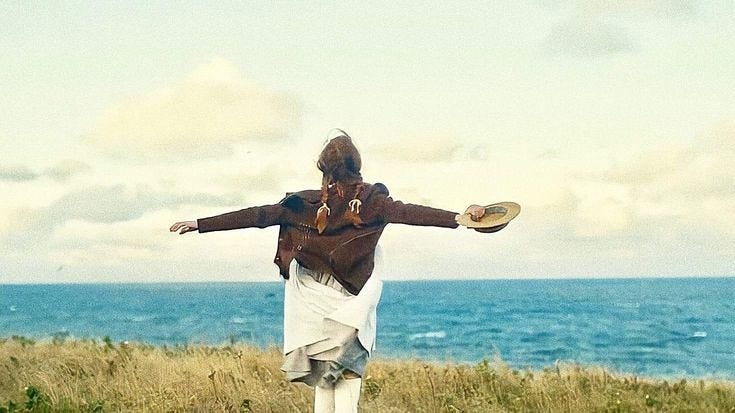
I am not finished with the Anne series yet. Sometime next month I hope to begin the eighth and final title, Rilla of Ingleside. But as I think back to the braided, ginger-haired girl with the slender face and large grey eyes of the first book, I feel I somehow understand her better now that I am acquainted with girlhood studies.
Anne Shirley is one of those few child characters who seldom expressed a predilection for growing up. She grounded herself in the reality of being a girl, valued every minute that separated her from the threshold of womanhood, and lived it to the fullest.
And now that I think of it—perhaps the fact that Anne fades into a background character as she grows older is Montgomery’s way of emphasizing girlhood, of telling us that it mattered.
I remember how, designing my curriculum back in December, I had planned for ecocriticism but not girlhood studies; the latter simply found its way to me through Amanda. It made me realize that a curriculum should not be rigid, that it is important to make room for those ideas that will pop up and surprise you along the way.
Though I’ve already set my topics and readings for the months of fall and winter, I’m sure something new and irresistible will somehow find its way into my schedule; through a person, through an overheard conversation or a passing remark as I scroll online or watch a show or listen to a podcast.
And that’s the beauty of learning, and of staying curious as you stride through life. At any given moment, something may intrigue you and demand your full attention—and suddenly there’s too much to read and think and talk about.
Speaking of reading—I’ve included in the section below a beginner’s reading list on ecocriticism and girlhood studies. I hope they captivate you as they did me.
Until next time,
Heba
A beginner’s starter pack: an ecocriticism and girlhood studies reading list
→ In theory
Loretta Johnson: Greening the Library: The Fundamentals and Future of Ecocriticism (journal article)
Mohammad Atuallah Nuri: Three Waves of Ecocriticism: An Overview (journal article)
Kate Rigby: Ecocriticism (textbook chapter)
Catherine Driscoll: Girls: Feminine Discourse in Popular Culture and Cultural Theory (book)
Catherine Driscoll: Girls Today—Girls, Girl Culture and Girl Studies (journal article)
→ In context (for those also reading The Secret Garden, O Meu Pé de Laranja Lima, and Anne of Green Gables)
Ignadhitya Herdiana: Nature’s Role Toward Mental And Physical Healing Reflected in ‘The Secret Garden’ By Frances Hudgson Burnett: An Ecocritical Reading (journal article)
Merve Günday: Greening the Desire with Plants in Frances Hodgson Burnett’s “The Secret Garden” (journal article)
Ozaias Antonio Batista and Ana Laudelina Ferreira Gomes: Childhood in the Shadow of a Lime and Orange Blossom (journal article)
Lauren M. Hinshaw: The acceptance of womanhood: gender performance and self-actualization in L.M. Montgomery’s Anne of Green Gables, Anne
of Avonlea, and Anne of the Island (thesis)
Maria Virokannas: The Complex Anne-Grrrl: A Third Wave Feminist Re-reading of Anne of Green Gables (thesis)
Are these topics in your personal curriculum as well? I’d love to hear what you think of them!
Know someone who might enjoy this discussion?
Barry, Peter. Beginning Theory: An Introduction to Literary and Cultural Theory. 1995, https://doi.org/10.7765/9781526153524.
Heba, I’m so excited to hear about your studies! All the topics you’ve chosen to focus on are incredibly interesting. I love Meu Pé de Laranja Lima, and I’m sure you’ll have wonderful insights to share about it.
Thank you for sharing my article on girlhood studies! I’m looking forward to reading your reviews.